

Find Consistent Clothing Sizing: A Complete Guide
Table of Contents
- Why Consistent Clothing Sizing Matters
- How to Measure Body for Clothing Accurately
- Alpha vs Numeric Sizing: Understanding the Difference
- How to Understand Size Charts
- Vanity Sizing Explained: Why Your Size Changes
- Tips for Online Clothing Shopping Success
- Finding Brands That Prioritize Fit Consistency
- Frequently Asked Questions
Last Updated: October 2, 2026
Why Consistent Clothing Sizing Matters
Finding consistent clothing sizing is one of the most frustrating challenges in fashion today.
Brands use different sizing standards, fit models, and measurement systems. Some use vanity sizing to make customers feel smaller; others prioritize international markets where sizing conventions differ. Understanding these variations prevents closets full of pieces that don't fit.
At Harper & Co., we understand that consistent clothing sizing directly impacts your confidence. We provide size-inclusive options with transparent sizing information.
How to Measure Body for Clothing Accurately
Accurate body measurements are the foundation for finding consistent clothing sizing. Measurement technique matters significantly, the difference between measuring too loose and too tight can shift your size by an entire range.
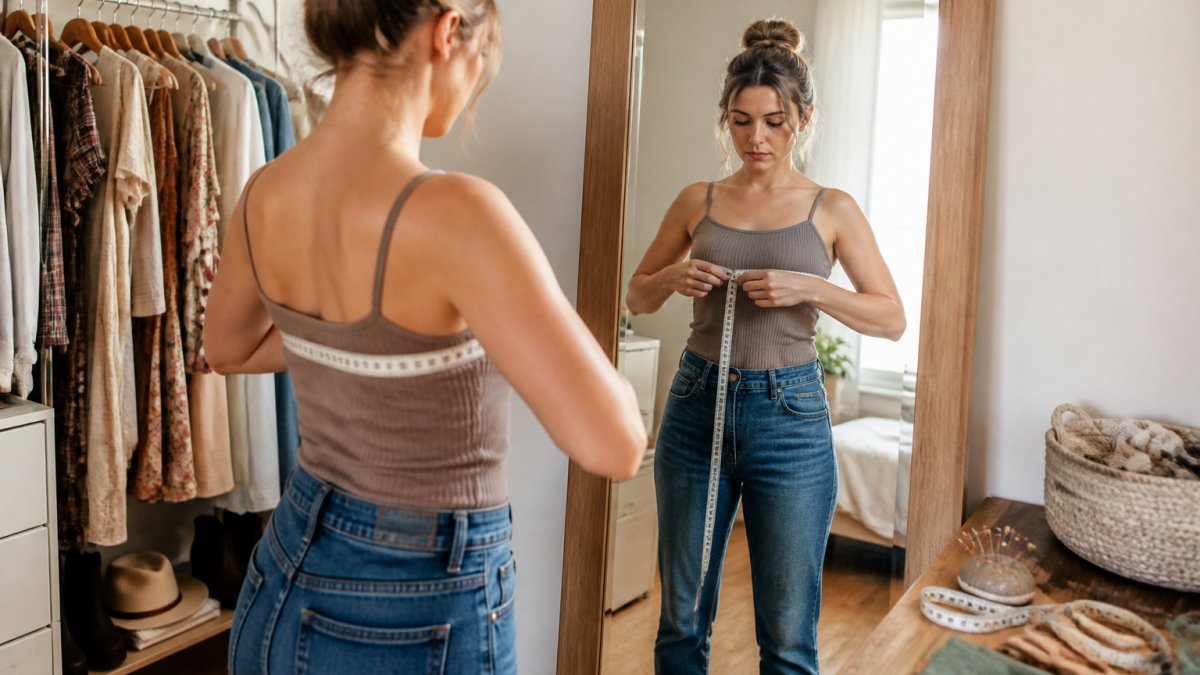
Measuring Your Bust
Your bust measurement determines how a garment will fit across your chest and shoulders. Stand in front of a mirror wearing an unpadded bra. Wrap a measuring tape around the fullest part of your chest, keeping it parallel to the ground, snug but not tight.
Measure at the end of a normal exhale, not while holding your breath. Record to the nearest quarter inch, precision matters when comparing to size charts.
Take three measurements and use the middle value to account for natural variation.
Measuring Your Waist and Hips
Measure your waist at the smallest part of your torso, typically one to two inches above your navel. Keep the tape horizontal and snug but not compressing.
Measure hips around the fullest part, typically seven to nine inches below your waist. Stand straight with feet hip-width apart and keep the tape level.
Measuring Your Inseam
Inseam length determines where pants will hit. Wear shoes you typically wear with pants and have someone measure from your inner thigh to the top of your shoe heel.
If measuring yourself, measure from inner thigh to floor and subtract half an inch to account for shoe heel height.
Alpha vs Numeric Sizing: Understanding the Difference
Sizing systems fall into two categories: alpha sizing (XS, S, M, L, XL) and numeric sizing (0, 2, 4, 6, 8, 10, etc.).
Alpha sizing is designed to be universal, but breaks down constantly, one brand's medium might fit a 34-inch bust while another's fits a 36-inch bust.
Numeric sizing (0-24) is based on actual body measurements, a size 6 typically corresponds to a 28-inch waist, a size 8 to a 29-inch waist.
Many brands now offer both systems.
How to Understand Size Charts
A size chart shows how a specific garment will fit your body. Effective use requires understanding what each measurement means and how it relates to actual fit.
Reading Manufacturer Specifications
Manufacturer specifications list the garment's actual dimensions, not body measurements. A "chest: 38 inches" is the finished garment measurement. A 38-inch garment might fit a 36-inch bust (with 2 inches of ease) or a 40-inch bust (with no ease).
Look for "ease" information, the difference between your body measurement and garment measurement. Standard ease is 2-4 inches; fitted garments have 1-2 inches; oversized have 6+ inches.
Compare dress length to garments you already own. If your favorite dress is 34 inches long and hits perfectly at your knee, look for new dresses in the 34-35 inch range.
Comparing Size Charts Across Brands
Compare size charts across brands. One brand might recommend a size 4 for a 36-inch bust, another a size 6. This reveals how each brand interprets measurements differently.
Write down your typical size in three favorite brands, then compare their size charts. You'll discover which brands use more generous sizing and which fit smaller frames.
This becomes your personal sizing reference. When encountering a new brand, compare its size chart to brands you know and make an educated guess about which size to order.
| Brand/Product | Typical Size | Bust Range | Waist Range | Hip Range | Fit Type |
|---|---|---|---|---|---|
| Judy Blue (Peggy Cargo) | 9/29 | 30-31" | 30" | 40-41" | True to size |
| Judy Blue (Holly Straight) | 9/29 | 31" | 31" | 40" | True to size |
| Judy Blue (Mckaylee Flare) | 9/29 | 31" | 31" | 38" | True to size |
| Judy Blue (Marty Wide Leg) | 9/29 | 31" | 31" | 43" | True to size |
Vanity Sizing Explained: Why Your Size Changes
Vanity sizing labels garments with smaller sizes than their measurements warrant. A 36-inch chest might be labeled size 2 instead of size 4.
Peggy High Rise Cargo Straight Jeans in Pink →

Vanity sizing works because customers feel better wearing smaller numbers.
Understanding vanity sizing removes emotional attachment to size numbers.
Some brands reject vanity sizing for numeric sizing that maps to body measurements. These brands are more transparent and consistent. When you find one, return to it.
Harper & Co. partners with brands like Judy Blue that use true-to-size numeric sizing with specific measurements for each size, eliminating guesswork.
Tips for Online Clothing Shopping Success
Online shopping requires a different approach to sizing than in-store shopping. You can't try things on before buying, so you need strategies to reduce the risk of ordering something that won't fit.
Building Your Personal Size Reference
Create a document listing your body measurements and typical size in each brand you buy regularly. Include fit preferences: snug or loose? High-rise or mid-rise? Knee-length or mid-thigh dresses?
When ordering from a new brand, check their size chart against your reference. If their size 6 has a 30-inch waist and you typically wear size 6 in brands with 31-inch waists, size up.
Include photos of garments you love in your reference. When you're shopping online and unsure about a piece, compare it to photos of garments that fit you perfectly.
Handling Returns and Fit Issues
Online retailers' return policies vary dramatically. Some offer free returns. Others charge return shipping. A few offer free returns only if the item is defective, not if it simply doesn't fit.
When you do receive items that don't fit, examine them carefully before deciding whether to return them.
If a garment doesn't fit and you're keeping it anyway, consider tailoring. A simple hem adjustment costs far less than buying a new pair of pants.
Finding Brands That Prioritize Fit Consistency
Not all brands care equally about sizing consistency. Some brands invest heavily in fit research, multiple fit models, and transparent sizing information. Others treat sizing as an afterthought.
Look for brands that provide detailed size charts with actual garment measurements, not just body size recommendations.
Read customer reviews with an eye toward fit comments.
Brands that use numeric sizing and provide detailed measurements tend to have more consistent sizing than brands using alpha sizing alone.
Harper & Co. carries brands like Judy Blue that prioritize fit consistency through detailed sizing information and multiple fit options. The Holly Mid Rise Straight jeans, for instance, are available in sizes 0/24 through 24W with specific measurements listed for each size. This level of detail makes it significantly easier to find consistent clothing sizing that works for your body.

Finding consistent clothing sizing starts with understanding your own measurements and then learning how different brands interpret those measurements.
At Harper & Co., we believe every woman deserves clothing that fits her body well and makes her feel confident. Our curated selection of size-inclusive pieces from brands like Judy Blue gives you access to garments with transparent sizing and consistent fit. Shop Collection and start building a wardrobe where every piece fits the way it should.
Frequently Asked Questions
How do I accurately measure my body for clothing?
Use a soft measuring tape and wear fitted clothing or undergarments. Measure your bust at the fullest part of your chest, your waist at the narrowest point, and your hips at the fullest part. For inseam, measure from your inner thigh to your ankle while standing barefoot. Keep the tape snug but not tight, and take measurements twice to ensure accuracy. Record your measurements and update them periodically, as body measurements can shift over time.
Why does clothing sizing vary so much between brands?
Manufacturers use different size standards and fit specifications. Vanity sizing, where brands cut garments larger than labeled, is common across the industry. Fabric composition also affects fit; stretchy materials fit differently than rigid fabrics. Additionally, different brands target different body types and fit preferences. Using a size chart specific to each brand, rather than relying on your usual size, helps you find consistent clothing sizing across retailers.
What is vanity sizing and how does it affect my shopping?
Vanity sizing occurs when manufacturers cut garments larger than the size label suggests, allowing customers to wear smaller sizes. A labeled size 8 might fit like a traditional size 10. This practice varies widely between brands. To avoid confusion, ignore the number on the tag and instead measure your body, consult the brand's size chart, and compare your measurements directly to their garment dimensions. This approach works regardless of vanity sizing tactics.
Are clothing size charts reliable for every brand?
Yes, when used correctly. Size charts show actual garment measurements from manufacturer specifications, making them far more reliable than size labels alone. However, charts vary by brand, so always check the specific retailer's chart rather than assuming consistency. Pay attention to how the garment is measured (bust across the chest, waist at the narrowest point) and compare those dimensions to your body measurements. Brands like Harper & Co. that provide detailed size charts with rise and inseam data help you make confident online purchases.