

How to Choose Plus Size Dresses for Everyday Wear?
Quick Summary
Start with a soft tape measure and record your bust, waist, and hip numbers, since these predict fit far better than a size label. Then check the fabric content and ease, and test each dress with a sit, walk, reach, and bend before committing to plus size dresses for everyday wear.
- Measure bust, waist, and hips in the undergarments you plan to wear, keeping the tape level.
- Compare your numbers to the size chart's body measurements, then check the garment's listed chest measurement for ease.
- Pick the larger size for woven fabrics and the smaller size for high-stretch knits when measurements fall between sizes.
- Look for at least one functional detail, such as side pockets or a waist tie, to make a dress practical for daily wear.
- Run the sit, walk, reach, and bend tests before buying to catch riding, pulling, or gaping problems.
Table of Contents
- Start With Your Measurements, Not Your Size Label
- Matching Silhouettes to Your Body Shape
- What Fabrics Are Best for Everyday Dresses
- Plus-Size Casual Dresses That Work All Week
- How to Style a Casual Dress for Different Days
- A Practical Everyday Dress Checklist Before You Buy
- Your Next Step: Building a Starter Wardrobe at Harper & Co.
- Frequently Asked Questions
Start With Your Measurements, Not Your Size Label
Last Updated: November 2, 2026
Most women shop plus size dresses by their usual size and hope for the best. That approach fails often, especially in plus sizes, where one brand's 18 can fit like another brand's 20.
A plus-size dress is a garment cut for a specific set of proportions. Those proportions vary widely, so the same label can produce very different results from one maker to the next. Measurements remove most of that guesswork.
Taking Bust, Waist and Hip Measurements
Use a soft tape measure and wear the undergarments you plan to wear with the dress. Stand relaxed, keep the tape level, and avoid pulling it tight.
- Bust: Measure around the fullest part of your chest, keeping the tape straight across your back.
- Waist: Measure around your natural waistline, usually the narrowest part of your torso.
- Hips: Measure around the widest part of your hips and seat.
Write the three numbers down. Re-measure once if the results seem off, since small errors add up quickly across a full dress.
Reading a Size Chart Across Different Dresses
Size charts list body measurements, not garment measurements. Compare your numbers to the chart's body measurements, then check the garment's listed chest or bust measurement to confirm the ease.
Ease is the extra room built into a garment, and it matters most when you shop plus size dresses.
Watch out: if your measurements fall between two sizes, the fabric decides which one to pick. Choose the larger size for woven or no-stretch fabrics and the smaller size for knits with high stretch.
Matching Silhouettes to Your Body Shape
A silhouette is the overall outline a dress creates on the body. The right shape depends on where you want the eye to land and how much structure you prefer.
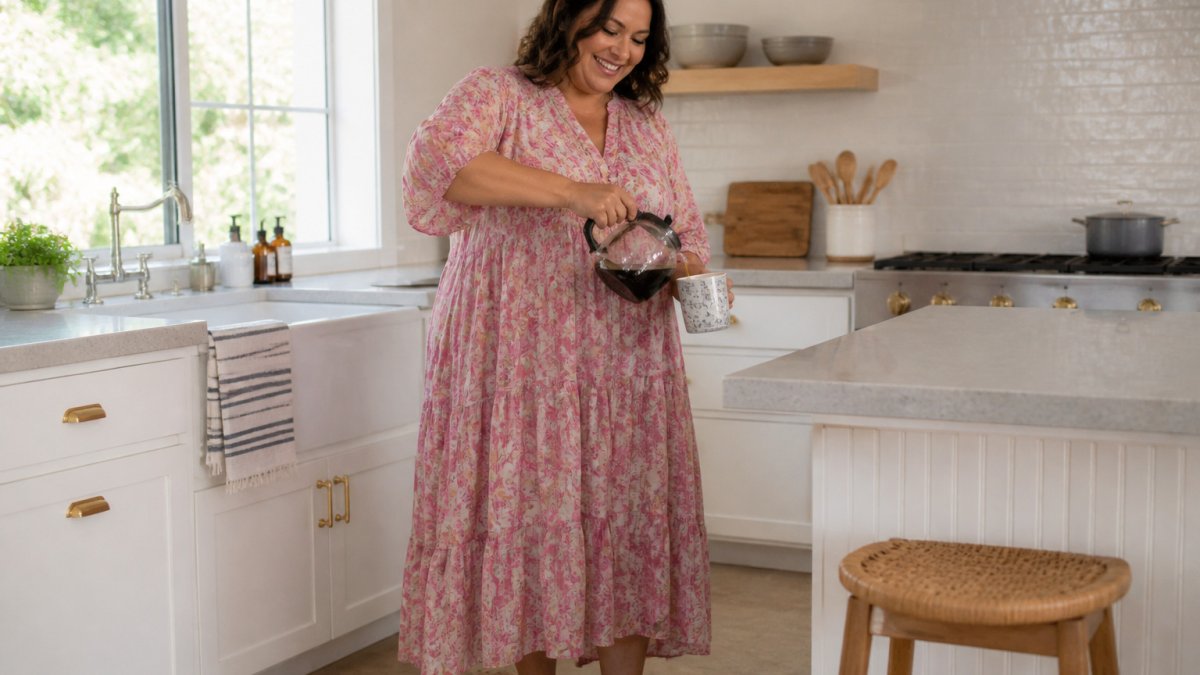
Empire waists, A-lines, and wrap styles tend to work across many body types because they create shape without clinging. Tiered and gathered designs add movement and volume at the hem, which can balance a fuller bust or hip.
Try a simple test: stand in front of a mirror and check whether the dress grazes your body or pulls across it.
What Fabrics Are Best for Everyday Dresses
Fabric affects comfort, drape, and how the dress holds up after repeated wear. For everyday dresses, look for materials that breathe, move with you, and recover their shape. Most style guides stop at that sentence. The harder question is which fabrics still look presentable after the tenth wash, and how to tell before you buy.
The Fabric Types Worth Knowing
- Knit and jersey: Soft, stretchy, and forgiving through the bodice and hips. Good for all-day comfort, but thin jersey can cling and show every seam line.
- Waffle knit: Textured and high-stretch, with more structure than standard jersey. The texture hides wrinkles and small stains well.
- Woven fabrics: Crisp and structured, but they need more ease for movement. Wovens hold their shape through repeated washing better than most knits.
- Brushed knits: Warm and cozy for cooler months, with a softer hand feel. Brushed surfaces pill faster than smooth knits, so check the fiber blend.
- Cotton-poplin and cotton-modal blends: Breathable and opaque, with enough body to skip a lining in many cuts.
Fabric content matters as much as fabric type. Check the fiber content and care label on each product listing before buying.
How to Judge Durability Before You Buy
A product listing rarely tells you how a dress behaves after a month of wear. These checks close that gap:
-
Shrinkage: Look for the fiber content and care label on each product listing before you decide between sizes.
-
Opacity: Hold the fabric up to light, especially at the bust and seat, before you buy.
-
Wrinkling: Squeeze a handful of the fabric and let go to see how it recovers.
-
Washability: Read the care label before you buy and choose a care routine you can keep up with.
Matching Fabric to the Season
Fabric choice also sets how often you reach for a dress. If you want one dress to work across seasons, choose a mid-weight knit and plan on layering rather than buying a second dress.
Care That Keeps Everyday Dresses in Rotation
- Wash knits inside out on a gentle cycle to reduce pilling and surface wear.
- Air dry stretch fabrics; heat is what breaks down spandex over time.
- Use a fabric shaver on pilled areas instead of retiring the dress.
- Store knits folded rather than hung so shoulders do not stretch out.
A dress that passes the durability checks is the one that stays in your weekly rotation instead of migrating to the back of the closet.
Plus-Size Casual Dresses That Work All Week
A casual dress should handle errands, work, and weekend plans without special effort. Look for pieces with functional details that make daily wear easier. But a dress that looks right in a mirror can still fail by mid-morning, riding up when you sit, pulling across the back when you reach, or bunching at the waist after lunch. The fix is to test movement, not just fit.
Functional Details That Earn Their Place
- Pockets: Side pockets keep your phone and keys close and make a dress feel practical rather than decorative. Check that the pocket bag is deep enough to hold a phone without sagging the seam.
- Waist ties and belt loops: These let you adjust fit through the day, which matters when a dress feels different after a meal or a long sit.
- Cased elastic cuffs and banded sleeves: These keep sleeves in place on the dresses that feature them.
The Four-Movement Test
Before you commit to a dress, run these checks in the fitting room or at home with the tags still on. Wear the shoes you plan to pair with it.
- Sit test: Sit on a chair, cross your legs, and lean forward. The hem should stay near your knee or wherever you want it, and the fabric across your lap should not pull tight. If the dress rides up several inches, it is too short or too narrow through the hip for daily wear.
- Walk test: Walk briskly for a minute, including a few stairs if you can. Listen for thigh rub and check whether the hem swings freely. A dress that restricts your stride will get left in the closet.
- Reach test: Raise both arms overhead and reach forward as if grabbing a high shelf. The bodice should not pull up at the waist or gape at the armhole. If it does, the dress needs more ease through the bust or a different armhole cut.
- Bend test: Bend at the waist to pick something off the floor. Check the neckline and back for gaping. A wrap or V-neck that stays put through a bend is a genuine everyday winner.
Two Examples That Pass the Tests
Our Every Single Touch V-Neck Tiered Dress, priced at $52.00, combines a textured woven fabric with functional side pockets and cased elastic sleeve cuffs. Compare more size-inclusive tops to pair with it. Its gathered and tiered layers create flattering dimension.
The Travel Plush Knit Dress in Soft Teal, at $43.95, takes a different approach. Its waffle knit and high-stretch fabric move with you, and its turtleneck and banded cuffs add warmth in cooler weather.
Building a Small Rotation
You do not need a closet full of dresses to cover the week. Choose one structured woven for workdays, one stretch knit for long sitting days, and one mid-weight option you can layer across seasons. That rotation covers errands, office days, and weekends without a single dress that fights you.
The article compares two everyday dresses by fabric, price and key features.
| Dress | Price | Fabric | Standout feature |
|---|---|---|---|
| Every Single Touch V-Neck Tiered Dress | $52.00 | Textured woven | Side pockets, cased elastic sleeve cuffs |
| Travel Plush Knit Dress in Soft Teal | $43.95 | Waffle knit, high-stretch | Turtleneck, banded cuffs for warmth |
How to Style a Casual Dress for Different Days
Styling a casual dress comes down to three choices: footwear, layers, and accessories. Change one of those and the same dress shifts from office-ready to weekend-ready.
For a workday, pair a knit dress with flat or low-heeled shoes and a structured layer such as a cardigan or blazer. For errands, keep the look simple with sneakers or sandals and a crossbody bag.
Layering also helps with temperature control. A lightweight jacket or open cardigan adds warmth in air-conditioned offices and comes off easily when the day heats up.
A Practical Everyday Dress Checklist Before You Buy
Run through this checklist before adding a dress to your cart:
- Your bust, waist, and hip measurements match the size chart.
- The fabric content suits your plans, whether that is stretch for long days or structure for work.
- The dress has at least one functional detail, such as pockets or a waist tie.
- The length works with the shoes you already own.
- You know the care instructions and can keep up with them.
- You can wear the dress at least three different ways.
Work through the checklist before buying and most fit problems disappear. A dress that passes these checks is far more likely to become a regular part of your rotation.
Your Next Step: Building a Starter Wardrobe at Harper & Co.
Start with two or three dresses that pass the checklist above, then add pieces that pair well with them. Harper & Co. carries size-inclusive dresses with functional details, so you can build a wardrobe that works for daily life. Browse the collection and find the styles that match your measurements and plans.
Frequently Asked Questions
How do I choose a flattering plus-size dress?
Start with your bust, waist and hip measurements rather than your usual size, because brands cut dresses differently. Look for a waist seam or tie that sits at your natural waist, and choose a silhouette that skims rather than clings, such as an A-line, wrap or tiered style. Try the dress on and check that the bodice lies flat, the armholes sit comfortably and the hem falls where you like it. A dress that fits your shoulders and bust well is easier to alter at the waist than the reverse, so prioritize the upper fit first.
What dress styles are comfortable for everyday wear?
Knit and jersey dresses with a bit of stretch tend to be the most comfortable for all-day wear, because they move with you when you sit, bend or walk. Tiered tank dresses and dresses with an elastic or banded waist also give room without adding bulk. Woven dresses with no stretch can still be comfortable if they have a relaxed cut, but they require more precise sizing. Check that sleeves and armholes allow full arm movement before you commit.
What fabrics are best for everyday dresses?
Brushed knits, ribbed knits and waffle knits are among the most practical everyday fabrics because they stretch, recover their shape and hide small wrinkles. Check the fiber content on the product listing before you buy, since it tells you how much stretch and recovery to expect.
How can I style a casual dress for different occasions?
Change the layer and the shoes before you change the dress. A tiered knit dress can be worn with white sneakers and a denim jacket for errands, or with platform sandals and a dainty necklace for dinner. Belts, cardigans and lightweight jackets shift the look between casual and polished. Keep accessories simple on a patterned dress and let the pattern do the work. Repeating the same dress with different shoes and layers is one of the easiest ways to build a versatile everyday wardrobe.
