

How to Avoid Vanity Sizing Online: A Shopper's Guide
Table of Contents
- What Is Vanity Sizing and Why It Matters for Online Shopping
- How to Measure Bust, Waist, and Hips Accurately at Home
- Reading Women's Clothing Size Charts by Measurements
- How to Find Your Clothing Size Online: A Step-by-Step Workflow
- What to Do When You Fall Between Clothing Sizes
- Common Mistakes to Avoid When Shopping Online
- Why Consistent Sizing Matters: The Harper & Co. Difference
- Frequently Asked Questions
Last Updated: October 14, 2026
What Is Vanity Sizing and Why It Matters for Online Shopping
Vanity sizing is when clothing manufacturers make garments larger than their labeled size suggests. A size 8 today fits like a size 12 did twenty years ago.
The core issue: you can't trust the number on a tag. Two size 10 dresses from different brands might fit completely differently, one loose, one snug. This inconsistency frustrates shoppers and leads to costly returns.
At Harper & Co., we focus on consistent sizing and transparent measurements. When you shop online, you're already taking a risk, vanity sizing makes it bigger.
Most guides treat vanity sizing like a simple problem with a simple fix. It isn't. The real solution requires measuring yourself, checking brand-specific size guides, and comparing actual garment measurements to your body.
How to Measure Bust, Waist, and Hips Accurately at Home
Getting accurate body measurements is the foundation for avoiding vanity sizing online. Measure correctly, and you'll know what fits regardless of the label.
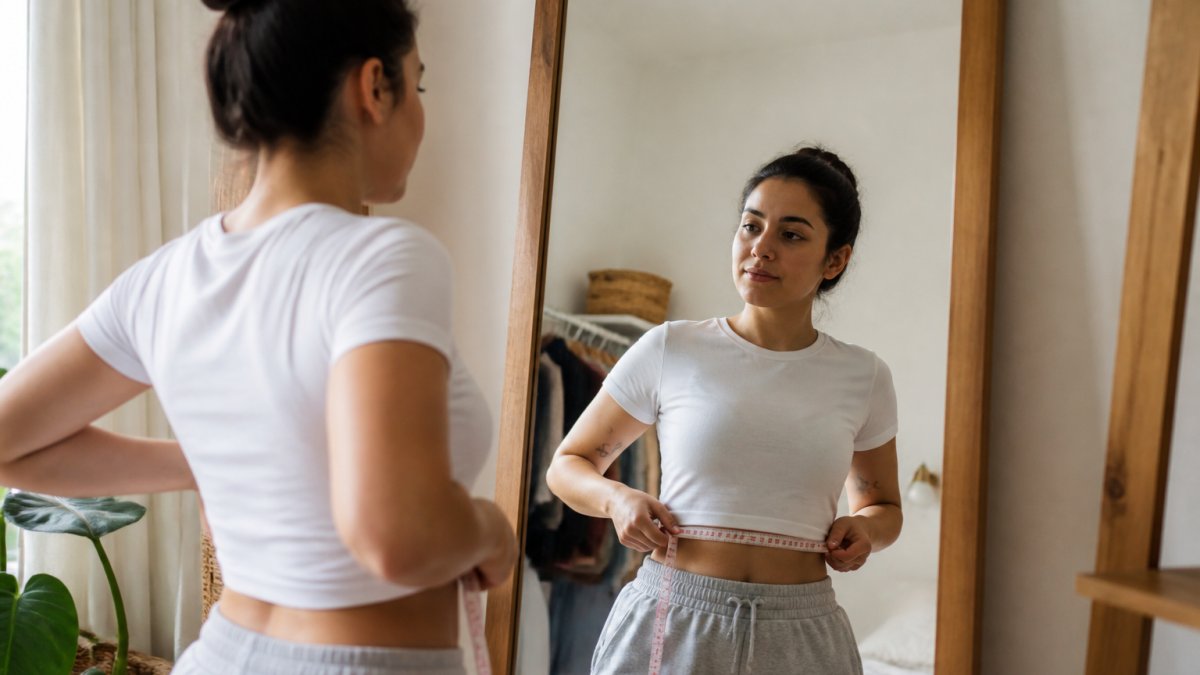
Tools You'll Need
You need very little:
- Soft measuring tape (fabric, not metal), essential and inexpensive
- Mirror, helps you see tape placement
- Lightweight clothing, a tank top or thin shirt, or measure over undergarments
- Pen and paper, write measurements down immediately
Don't use a ruler or hard tape. A soft fabric tape is flexible, conforms to your body, and gives accurate readings.
Step-by-Step Measurement Process
Follow these steps in order. Consistency matters: measure at the same time each day if possible, in similar clothing.
Step 1: Measure Your Bust
Stand straight and relaxed. Wrap the tape around the fullest part of your chest, parallel to the ground. It should be snug but not tight, one finger should fit underneath. Write it down.
Step 2: Measure Your Waist
Find your natural waist, the narrowest part of your torso, usually just above your belly button. Wrap the tape around it, level and parallel to the ground, snug but not tight.
Step 3: Measure Your Hips
Stand with feet hip-width apart. Measure around the fullest part of your hips and buttocks, level and snug, usually 7-9 inches below your waist. Write it down.
Step 4: Take Inseam if Buying Pants
For jeans and trousers, inseam matters. Wear shoes with a heel similar to what you'll pair with the pants.
Reading Women's Clothing Size Charts by Measurements
Once you have your measurements, use a brand's size chart to find the right size. This is where avoid vanity sizing online becomes practical.
Most brands publish size charts showing bust, waist, and hip measurements per size. Use these, not the label. If a brand's size 8 has a 34-inch bust and yours is 35 inches, order the size 10.
Look for brands with detailed size charts. If a brand shows only sizes and no measurements, that's a red flag, brands confident in their sizing transparency publish measurements.
Compare your measurements to the chart and find the row where bust, waist, and hips fit best. If your bust is 36 inches and the size 10 chart shows 35-37 inches, that's your size.
How to Find Your Clothing Size Online: A Step-by-Step Workflow
Shopping online for clothes that fit requires a systematic approach. Follow these steps every time.
Step 1: Gather Your Body Measurements
Before shopping, have your measurements written down somewhere accessible, a phone note, wallet card, or computer document.
You should know:
- Bust measurement
- Waist measurement
- Hip measurement
- Inseam (if buying pants or dresses)
These four numbers are your shopping reference. They matter more than any size label.
Step 2: Check the Brand's Size Guide Before Ordering
Find the brand's size guide, usually a "Size Chart" or "Sizing Guide" link in the footer or near the product description.
Look for a chart listing bust, waist, and hip measurements per size, then find the size that matches yours best.
If the brand doesn't publish a size chart, check customer reviews, many mention fit. If a size 10 is described as "runs small" or "generous," that's useful, but measurements beat reviews.
Step 3: Compare Garment Measurements with Your Body Measurements
Here's the step many shoppers skip: garment measurements differ from size chart measurements. A garment has ease, extra fabric for comfort and movement.
For example, a fitted dress might have 2 inches of ease at the bust: labeled size 10 with a 36-inch bust, the actual garment measures 38 inches. That extra room is intentional.
Find the garment measurements, often listed near the size chart, and compare them to your body measurements.
A 36-inch bust with a 38-inch garment measurement gives 2 inches of ease, typical for a fitted dress. A 40-inch garment gives 4 inches and will fit looser.
Step 4: Review Fit Photos and Customer Reviews
Look at customer photos. Many online retailers now show customer reviews with photos of real people wearing the item. These photos show how the garment actually fits on different body types.
Read the reviews. Customers mention fit directly. "This runs small," "generous sizing," "true to size," "tight in the shoulders", these comments are gold. They tell you how the garment fits in practice, not just in theory.
Fallon Mid Rise Adjustable Waist Raw Hem Skinny Jeans →
Pay attention to reviews from customers with similar measurements to yours. If someone with a 36-inch bust says the size 10 is perfect, and your bust is also 36 inches, that's relevant. If someone says the size 10 is tight and they have a 38-inch bust, that's also useful.
| Step | What to Do | Time | Why It Matters |
|---|---|---|---|
| Gather measurements | Write down bust, waist, hip, inseam | 5 min | Reference point for all shopping |
| Check size guide | Compare your measurements to brand chart | 3 min | Ensures you order the right size |
| Compare garment measurements | Check actual garment specs vs. your body | 2 min | Accounts for fit and ease |
| Review photos and reviews | Read customer feedback and see fit photos | 5 min | Real-world fit information |
What to Do When You Fall Between Clothing Sizes
Sometimes your measurements fall between two sizes. Your bust might be 35 inches, and the size 8 chart shows 34 inches while the size 10 shows 36 inches. Which do you choose?
Go with the size that's closest to your largest measurement.
If the garment has significant ease, you might size down. A loose, flowing blouse with 4 inches of ease can work in a smaller size.
When in doubt, order both sizes. Yes, this costs more in shipping. But many brands offer free returns or exchanges.
Some brands now offer free returns for online orders. Harper & Co. understands that fit is personal. We want you to find pieces that work for your body. That's why consistent sizing matters.
Common Mistakes to Avoid When Shopping Online
Online shopping mistakes cost money and time.
Mistake 1: Trusting the label without checking measurements
The label says size 10. You've worn a size 10 for years.
Fix: Always check the size chart. Always compare your measurements. The label is not reliable.
Mistake 2: Ordering only one size when you're uncertain
You're not sure between a size 8 and a size 10.
Fix: If you're uncertain, order both sizes.
Mistake 3: Ignoring customer reviews about fit
The size chart says you need a size 10.
Fix: Use the size chart as your starting point, but let customer reviews inform your decision.
Mistake 4: Not accounting for fabric and stretch
A cotton dress will fit differently than a stretchy knit dress.
Fix: Check the fabric content. If a garment has spandex or elastane, it will stretch.
Mistake 5: Measuring yourself incorrectly
You measure your bust while wearing a heavy sweater. The measurement is too large.
Fix: Measure yourself in lightweight clothing or undergarments. Measure the same way each time.
Why Consistent Sizing Matters: The Harper & Co. Difference
Vanity sizing frustrates shoppers. It creates uncertainty. When you shop online, you're already taking a risk. You can't try the clothes on. Vanity sizing adds another layer of risk.
That's why Harper & Co. focuses on consistent, transparent sizing. We work with brands like Judy Blue that prioritize accurate measurements.
Our Fallon Mid Rise Adjustable Waist Raw Hem Skinny Jeans are a perfect example. They're true to Judy Blue sizing, which means the measurements are reliable.

Consistent sizing reduces returns. When shoppers don't have to guess, they order the right size the first time. This is better for you and better for us.
We also offer free shipping on orders over $100. That makes it easier to order multiple sizes if you're uncertain. But with consistent sizing, you shouldn't need to.
Frequently Asked Questions
What exactly is vanity sizing and how does it affect my online shopping?
Vanity sizing occurs when brands label clothing with smaller numbers than the actual measurements, making shoppers feel they fit a smaller size. Online, this creates confusion because you can't try items on before buying. A size 8 from one brand may fit very differently than a size 8 from another. Instead of relying on the size label, measure your bust, waist, and hips, then compare those measurements directly to the brand's size chart. This approach bypasses vanity sizing entirely and ensures better fit accuracy when shopping online.
How do I find my clothing size online if I've never measured myself before?
Grab a soft measuring tape and measure your bust (fullest part), waist (narrowest part), and hips (fullest part around your hip bones). Wear minimal clothing or undergarments for accuracy. Record these three measurements, then visit the brand's size chart before adding anything to your cart. Compare your measurements to the chart's columns, not the size labels. Most online retailers now display garment-specific measurements (inseam, rise, sleeve length), which you should also compare to similar items you already own and like the fit of.
What should I do if my measurements fall between two clothing sizes?
When your measurements land between sizes, prioritize the fit of the area that matters most to you. If your bust fits a medium but your hips fit a large, choose based on which area is harder to alter or more important for the garment's style. Check customer reviews and fit photos to see how the item actually fits on real bodies. Many shoppers in your situation report sizing up or down depending on the brand's fabric and cut. If the brand offers easy exchanges, ordering both sizes to try at home removes the guesswork.
How can I tell if a brand uses vanity sizing before I order?
Read customer reviews and look for fit photos posted by buyers. If multiple reviewers mention the item runs small or large compared to the size label, that's a sign of inconsistent or vanity sizing. Compare the brand's size chart measurements to similar items from brands you know fit you well. If a size 10 has a 28-inch waist but you know your true waist is 29 inches, that's vanity sizing. Brands with transparent, detailed size guides and consistent measurements across their product lines tend to avoid vanity sizing. Harper & Co. provides specific garment measurements for each item, helping you make confident choices based on actual dimensions rather than labels.
Shopping online doesn't have to mean guessing about fit. By measuring yourself accurately, checking brand size guides, and comparing garment measurements to your body, you can avoid vanity sizing online and find clothes that fit perfectly. Brands that publish transparent measurements, like the curated selection at Harper & Co., make this process even easier. Shop Collection and discover pieces designed for your body, not a number on a tag.